
Admin
Follow the Buddha’s Path to Dhamek Stupa in Sarnath
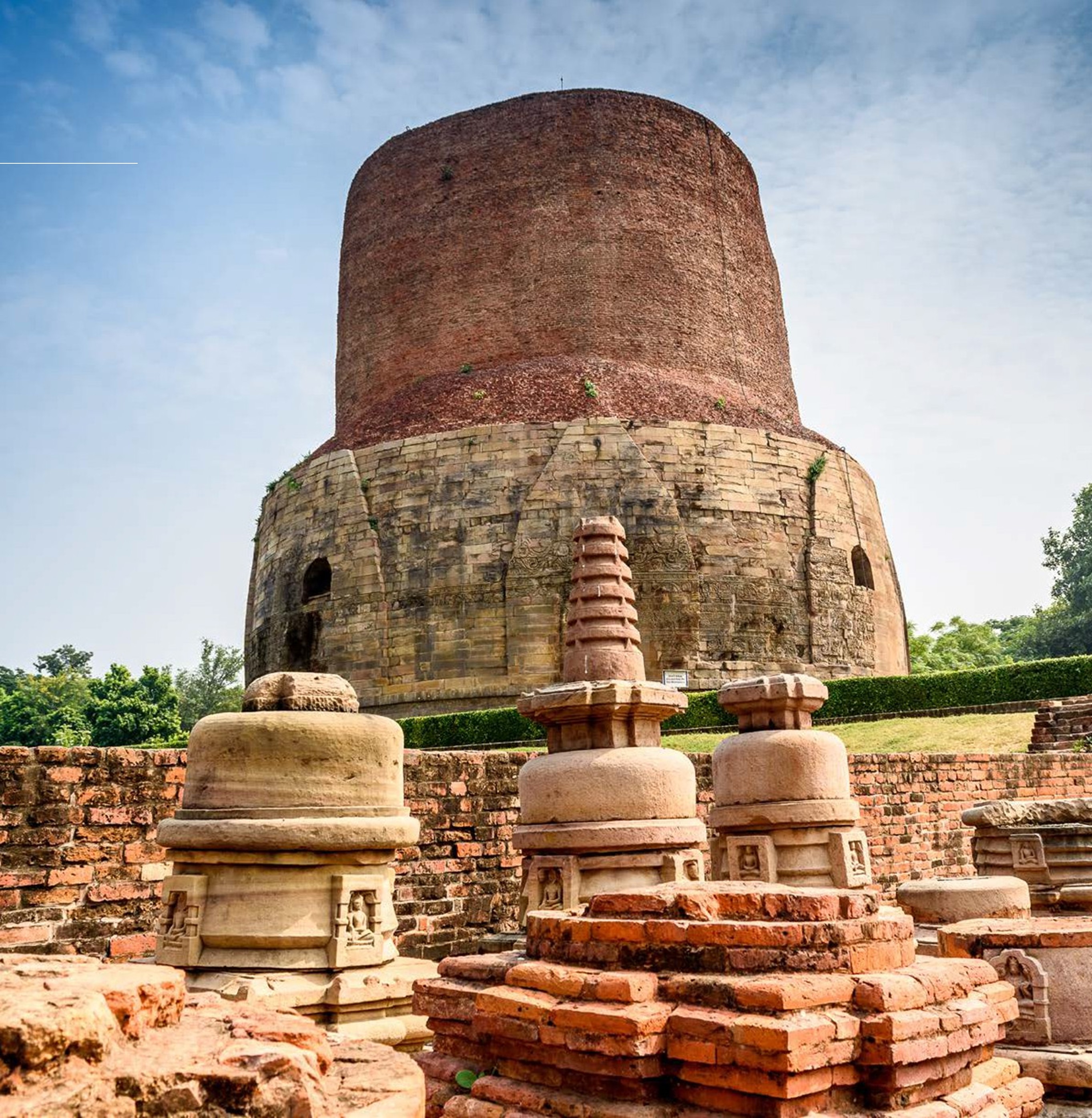
In the tranquil town of Sarnath, near the vibrant spiritual city of Varanasi, stands the Dhamek Stupa — a monument of immense spiritual and historical significance. It is here, over 2,500 years ago, that Lord Buddha delivered his first sermon to his five disciples after attaining Enlightenment in Bodh Gaya. This marked the beginning of the Dhamma Chakra Pravartana — the turning of the Wheel of Dharma.
The original stupa was built by the Mauryan emperor Ashoka in the 3rd century BCE, a staunch patron of Buddhism who played a pivotal role in spreading its message far and wide. The current structure, built in 500 CE, is a massive cylindrical tower rising 43.6 metres, made of stone and brick. Its stone-carved lower half is decorated with delicate floral and geometric motifs — remnants of the Gupta period artistry.
Pilgrims and visitors from across the globe arrive here, not just to admire the architectural brilliance, but to absorb the quiet energy of reflection, peace, and meditation that fills the space. It’s a place that allows one to connect with the core philosophies of Buddhism — compassion, mindfulness, and the path to liberation.
Nearby Attractions
While Sarnath itself is rich in Buddhist relics and monastic ruins, visitors often explore nearby Varanasi:
-
Kashi Vishwanath Temple – One of the holiest temples dedicated to Lord Shiva.
-
Varanasi Ghats – The lifeline of spiritual Varanasi, famous for Ganga Aarti and rituals.
-
Vishwanath Khanda – A rejuvenated spiritual district in Varanasi offering cultural immersion.
Connectivity
Reaching Dhamek Stupa is easy via:
-
By Air: Varanasi Airport, about 25 km away.
-
By Rail: Varanasi Junction, well-connected to major Indian cities.
-
By Road: Accessible via road from Varanasi through Sarnath, around 10 km away.
Best Time to Visit
Plan your visit between October and March, when the weather is pleasant and ideal for sightseeing and spiritual exploration.
Dhamek Stupa is more than a monument — it’s a timeless sanctuary of peace. Whether you're a pilgrim, a seeker, or a history enthusiast, walking this sacred path is an invitation to introspection and awakening.